
Credit to: Delaware Spotlight, Olivia Marble
Overharvesting once posed a serious threat to horseshoe crabs, a species that plays a vital role in the Delaware Bay ecosystem. Today, however, protections implemented more than two decades ago appear to be helping the state's iconic “living fossil” make a comeback.
On a windy evening in mid-May, roughly a dozen volunteers gathered at the James Farm Ecological Preserve near Ocean View carrying charts, thermometers and a white PVC square. Their task was simple: place the square at various points along the beach and count the male and female horseshoe crabs found within it.
“I like seeing the surprise on everyone’s faces when they see how many there are,” said Lorie Whitehaus, a team lead on the survey.
The survey is part of a statewide monitoring effort coordinated by the Delaware Department of Natural Resources and Environmental Control (DNREC) and the Center for the Inland Bays.
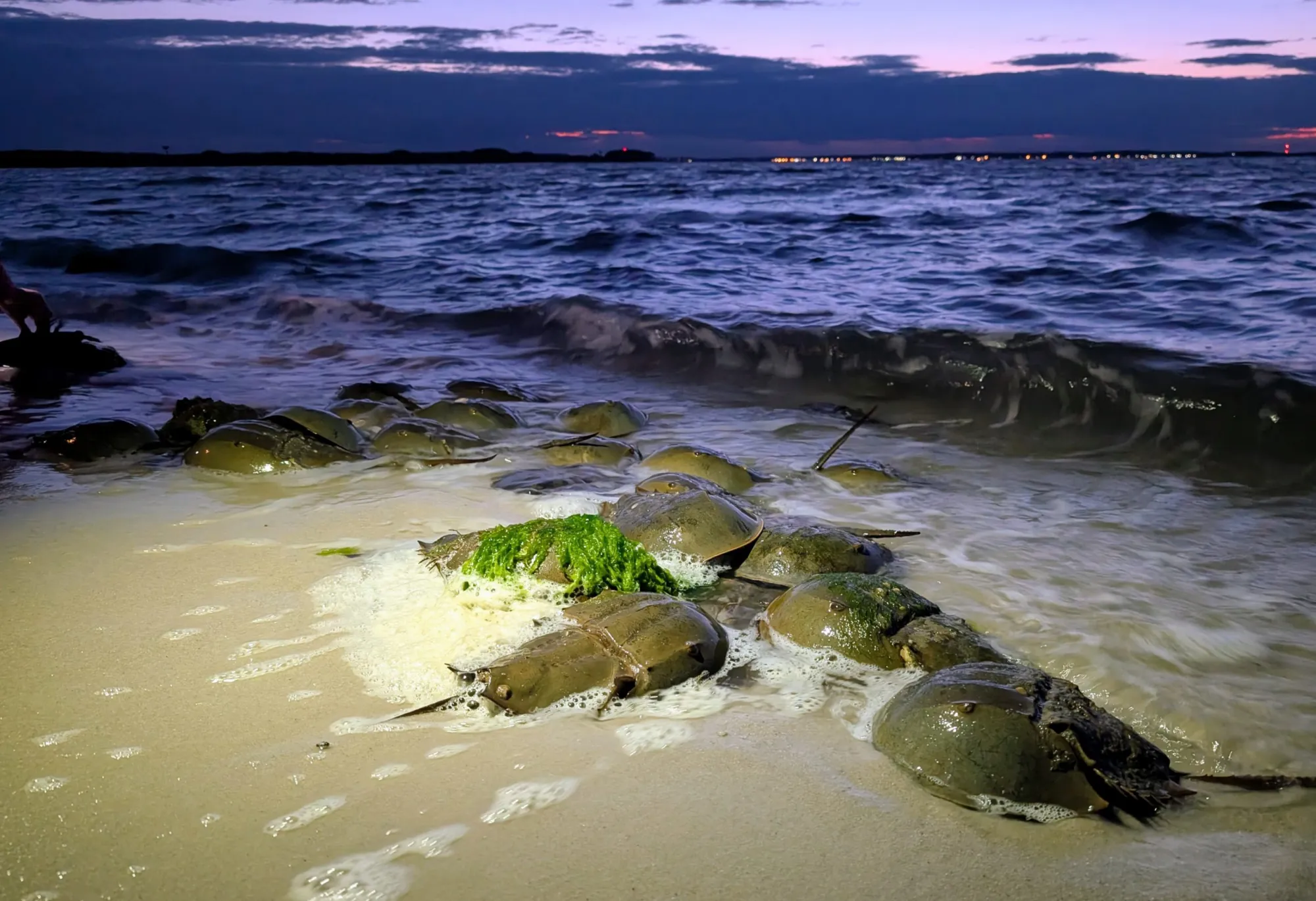
Recent survey results have given marine biologists reason for optimism about the future of the 450-million-year-old species. Horseshoe crabs are often called “living fossils” because they are among the oldest surviving species on Earth, predating dinosaurs by roughly 100 million years.
According to Jordan Zimmerman, a horseshoe crab biologist for the state of Delaware, the Delaware Bay population is nearing historic levels.
The bay supports the world's largest concentration of horseshoe crabs and remains a critical habitat within the estuary ecosystem. Yet in the 1990s, heavy harvesting caused a dramatic decline in their numbers.
In response, Delaware and neighboring states introduced harvest restrictions about 30 years ago. Since then, the population has steadily recovered and is now approaching the levels seen before the decline, Zimmerman said.
The recovery stands out as a rare environmental success story.
“We don’t get too many of those,” Zimmerman said. “It’s very difficult to manage natural resources.”
DNREC tracks commercial horseshoe crab harvests through mandatory reporting requirements and inspection stations. Harvest limits apply to male crabs, while collecting and keeping females is prohibited.
Two major industries contributed to the population decline. Fishermen harvested horseshoe crabs for bait, while biomedical companies collected them for their blood.
In the 1960s, researchers discovered that horseshoe crab blood contains a substance known as limulus amebocyte lysate, or LAL, which clots when exposed to pathogens.
Because LAL is used to detect bacteria and toxins in nearly every pharmaceutical product, horseshoe crab blood has become one of the world's most valuable liquids, with LAL selling for as much as $60,000 per gallon.
Blood collection typically does not kill the animals, and they are returned to the water afterward. However, some studies suggest roughly 15% die as a result of the process.
Zimmerman cautioned that the actual mortality rate remains uncertain because research conditions often differ from those used during commercial blood collection.
“If we want to get an idea of the industry impacts on them, then we need to use crabs that are handled the exact same way,” he said.
Scientists have also developed a synthetic substitute for LAL that could reduce the need to collect horseshoe crab blood. Last year, the U.S. Pharmacopeia concluded that the synthetic alternative is just as effective at detecting pathogens.
During the peak spawning months of May and June, volunteers conduct surveys during every full and new moon, heading to the beaches whenever nighttime high tide occurs — whether at 7 p.m. or midnight.
Many nights, the shoreline is covered with dozens or even hundreds of horseshoe crabs.
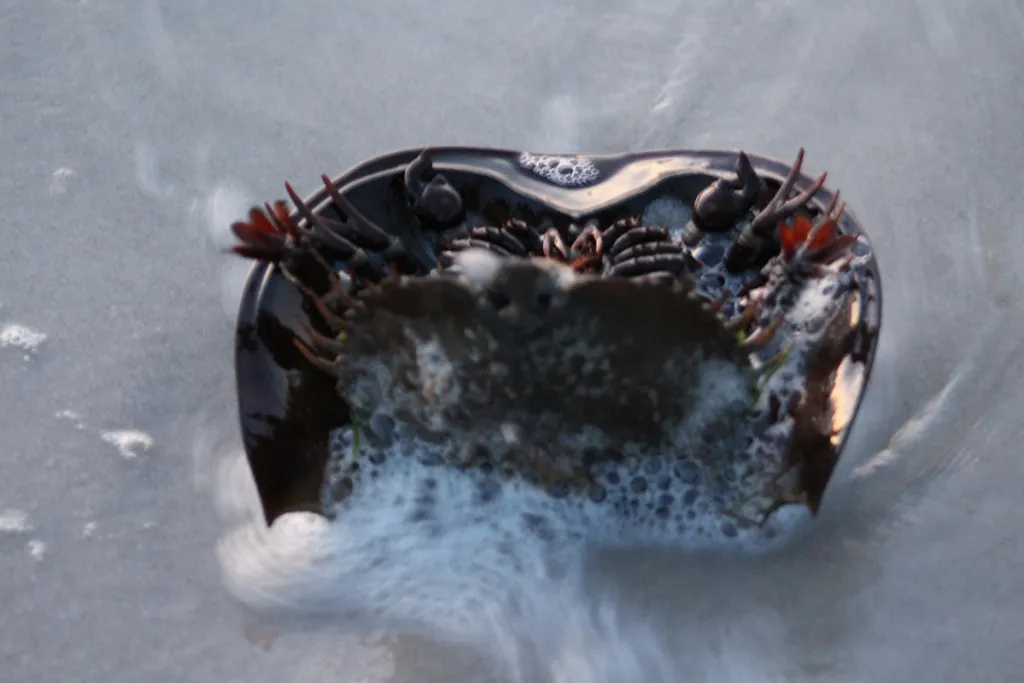
“There’s nothing that can replace the experience of seeing them in the wild,” said Nivette Pérez-Pérez, manager of community science at the Center for Inland Bays.
Zimmerman said people travel from across the country to participate in the surveys and witness the annual spawning event firsthand.
Center for the Inland Bays volunteer Cathy Hutchins said some residents are frustrated by the influx of horseshoe crabs that arrive during breeding season.
“But I know if you don’t have them, you’re not going to have the birds,” Hutchins said.
Female horseshoe crabs lay approximately 80,000 eggs each year, Pérez-Pérez said. Those eggs provide a critical food source for migratory shorebirds, including red knots and sanderlings.
Although the horseshoe crab population is rebounding, Pérez-Pérez noted that climate change, pollution and coastal development continue to pose long-term threats.
The nonprofit Center for Biological Diversity recently sued the Trump administration, arguing that federal officials failed to classify horseshoe crabs as a threatened or endangered species.
Pérez-Pérez said one of the easiest ways people can help is by turning over horseshoe crabs that become stranded on their backs. Many die when they are unable to right themselves before the tide recedes.
The safest way to help them, she said, is to grasp the edge of the shell rather than the tail.

Leave A Comment